Download your FREE ebook!

Food Addiction…or Food Restriction?
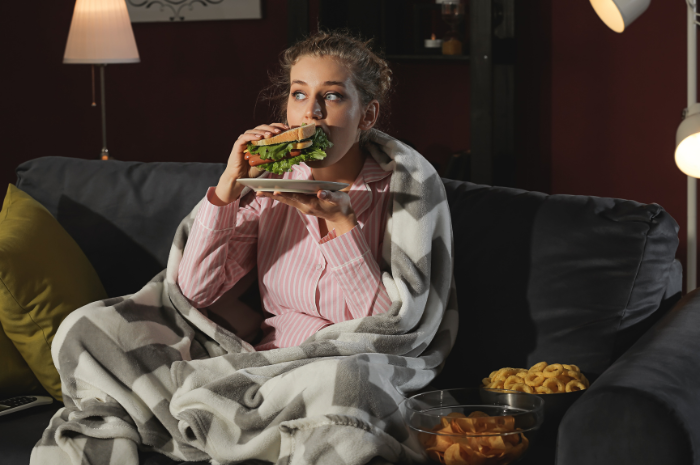
If you feel like you can’t stop eating once you start…
Or you manage to “stay on track” all day, but then feel like you “lose control” at night…
You may have told yourself: “I’m addicted to food.”
But… is this really addiction? Or is there something deeper that explains this pattern?
What is Food Addiction?
In recent years, the term “food addiction” has become widely used—both in the health field and in everyday conversations. Many people now use it to describe their relationship with food, often without professional guidance.
It’s usually used to describe:
- An inability to stop eating (loss of control)
- Or eating large amounts of food in a short period of time (binge eating)
But the real question is:
Is this truly an addiction?
Or is it an oversimplified explanation of a more complex behavior?

A Real-Life Example
Let’s look at a common scenario:
Someone follows a “clean” or “diet” plan all day: Rice cakes, salads, light foods…
But at night?
They feel a strong urge to eat
They eat large amounts
And feel completely out of control
This is often labeled as “addiction.”
But in reality? This is a very natural response to restriction.
Does Sugar Actually Cause Addiction?
Many people refer to a study suggesting that sugar may activate the brain’s reward system more than certain drugs.
But what is often overlooked is the context of that study:
- The rats were deprived of food for 12 hours
- Then further delayed to ensure extreme hunger
This highlights something important:
The main driver wasn’t sugar itself…It was intense hunger.
Which leads to a key insight:
The issue is not the food itself…It’s restriction.
What Do Other Studies Show?
In the well-known “Rat Park” experiment, rats were placed in two different environments:
- A small, isolated cage + access to a drug
- A large, enriched environment with social interaction + the same drug
The result: Isolated rats consumed significantly more. While rats in the enriched environment did not.
The conclusion:
Addiction is not just about the substance—It is also about environment, stress, and isolation.
This reflects what we often see in real life:
Not everyone who eats the same foods loses control. But those experiencing stress, loneliness, or restriction are more likely to struggle with it
Is It Just Brain Chemistry?
Food is sometimes described as “addictive” because of its effect on dopamine.
But dopamine is also released when we:
- Laugh
- Exercise
- Spend time with people we enjoy
So does that mean all of these are addictive?
Of course not. In fact, recent research shows that dopamine responses to foods like milkshakes are not consistent and are not clearly linked to obesity.
In other words: Dopamine does not equal addiction.
Food is not a drug—It is something that can be pleasurable, and that is normal.
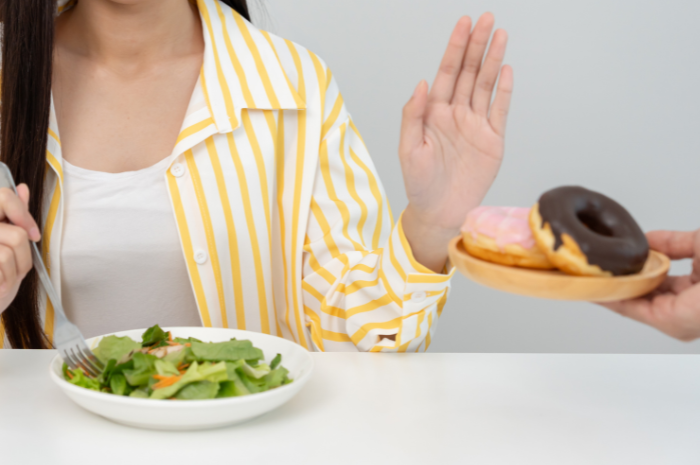
What About “Diet” Foods?
When you eat low-calorie or sugar-free foods, your body expects energy… but doesn’t receive it.
This can lead to:
- Ongoing hunger signals
- Lack of satisfaction
- Increased cravings later
- Or episodes of overeating
Over time, this can create a cycle:
Trying to “control” intake by choosing lighter or low-calorie foods…
→ feeling more hungry and unsatisfied
→ then eating larger amounts later to compensate
Eventually, this pattern may feel like “loss of control” or even “addiction”. But in reality, it is a natural response to not meeting your body’s needs.
So the issue is not willpower…And not even the food itself…It is the pattern of restriction—even when it appears in subtle forms.
One of the Ways “Food Addiction” is Assessed
Some professionals use the Yale Food Addiction Scale (YFAS), a questionnaire designed to identify behaviors that resemble addiction toward food.
It includes questions such as:
- Do you eat more than you intend and feel unable to stop?
- Do you think about food constantly?
- Do you feel distressed when trying to cut down?
- Does eating affect your daily life or relationships?
However, when we look closely, these questions do not necessarily measure “addiction” in the clinical sense. Instead, they often reflect patterns seen in eating disorders, such as:
- Binge eating
- Emotional eating
- Bulimia
Interestingly, individuals who severely restrict food (such as those with anorexia) may also score high on this scale—despite not overeating at all.
This raises important questions about whether the scale is actually measuring addiction, or the effects of restriction and disordered eating patterns.
It’s also important to note that “food addiction” is not an official diagnosis in the DSM-5.
But that does not mean the experience isn’t real. The feeling of losing control is very real—
and often rooted in restriction, deprivation, or a difficult relationship with food, not necessarily addiction in the medical sense.
The Key Insight
Research consistently shows that restriction, dieting, and food control are strongly linked to binge eating and loss of control. The more you restrict, the more likely you are to “break” later.
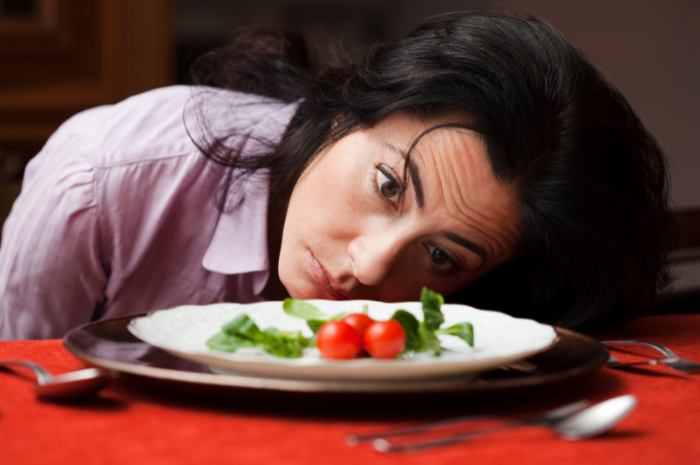
So What’s the Real Issue?
When we look deeper, one factor shows up again and again: Restriction.
Whether physical (not eating enough) or mental (labeling foods, guilt, rules).
It can lead to:
- Changes in brain response
- Increased reward sensitivity to food
- Behaviors that look like addiction
In some cases, this can overlap with emotional eating—where food is also used to cope with feelings, not just restriction.
Here’s What You Need to Know
If you feel “addicted” to certain foods…it’s not because you are weak, it’s not because you lack willpower. It’s often because you are restricted.
If Restriction is the Problem…Is More Restriction the Solution?
Typical advice includes:
- Cutting carbs
- Avoiding sugar
- Exercising more
But this often makes things worse, and keeps you stuck in the same cycle:
Restriction → cravings → overeating → guilt → restriction
So What Actually Helps?
Both research and real-life experience suggest the opposite:
People who believed they were “addicted” to sweets often see a reduction in cravings
when they stop restricting them.
Over time:
- Urges decrease
- Binge episodes reduce

Practical Steps
- Let go of food judgments
- Reintroduce foods instead of avoiding them
- Allow yourself to eat without strict rules
- Learn to respect your body’s signals
In the End…
The problem is not you, and it’s not the food. It’s the relationship with food. And that is something that can change.
FAQs
Is food addiction a diagnosable mental illness?
No, it is not officially recognized in the DSM-5, but it may reflect patterns related to restriction or disordered eating.
Can we be addicted to food like nicotine or shopping?
Food is a basic human need, and these behaviors are often responses to stress or restriction, not true addiction.
Why can’t I stop eating once I start?
Often due to restriction—physical or mental—which leads to compensation later.
Why do I “stay on track” all day and then lose control at night?
Because restriction during the day is not sustainable, and the body eventually responds.
Does sugar cause addiction?
There is no strong evidence that it does, but it can feel that way in the presence of restriction.
Is cutting out certain foods the solution?
Usually the opposite—restriction increases fixation, while permission reduces it over time.
Is emotional eating the same as food addiction?
Not exactly. Emotional eating is using food to cope with feelings, while “food addiction” often describes loss of control. However, both can share underlying factors like restriction and emotional distress. And even if emotional issues are addressed, ongoing restriction may still prevent true food freedom.
But I’m not restricting…so why do I still feel out of control?
Restriction is not always physical—it can be mental. Food rules, guilt, and compensation behaviors can create the same effect.
References
- Intense Sweetness Surpasses Cocaine Reward Study
https://journals.plos.org/plosone/article?id=10.1371/journal.pone.0000698 - Rat Park Experiment
https://en.wikipedia.org/wiki/Rat_Park - Milkshake Study (Dopamine Response)
https://pubmed.ncbi.nlm.nih.gov/40043691/




Leave A Comment