Download your FREE ebook!

5 Things I Let Go of During Recovery
In previous articles, I’ve talked about some of the things you can gain through recovery—from reconnecting with your healthy self to feeling more comfortable in your body.
But what about the things you might lose along the way?
Sally says:
“The truth is, recovery wasn’t just a journey away from pain. It was also a journey of rediscovering myself.
I realized that some of the things I was holding onto because I thought they were helping or protecting me were actually keeping me stuck. Over time, I learned that recovery didn’t mean becoming someone else. It meant finding my way back to myself, without everything that had been weighing me down.
So, little by little, I began leaving certain things behind and making space for a calmer version of myself.”
Here are five things Sally chose to let go of as part of her recovery:
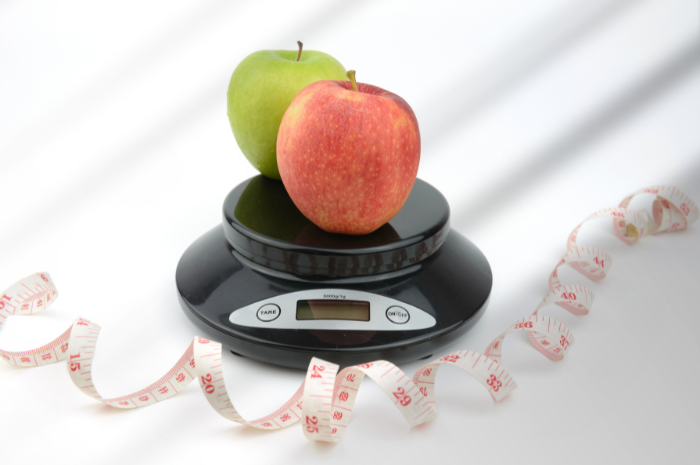
1. The food scale
For a long time, the food scale was a way of making sure she was eating the “right” amount.
During recovery, Sally began learning that her body doesn’t need exactly the same amount of food every day. Some days it may need more, and other days less.
Hunger, fullness, activity, and our needs naturally change from day to day. Our bodies aren’t machines that require a fixed amount of food every single day.
2. Shapewear
Shapewear was another thing Sally chose to let go of during recovery.
While it may temporarily smooth or change the appearance of certain areas of the body, it doesn’t actually change your body shape or reduce body fat.
For Sally, letting go of shapewear wasn’t just about physical comfort. It was about moving away from the belief that her body needed to be hidden, compressed, or reshaped to look acceptable.The goal wasn’t to stop wearing shapewear because it’s inherently wrong, but to stop feeling that she needed it.
3. The step counter
Sally says:
“I was obsessed with reaching 10,000 steps every day. If I saw that I had walked less than that, I would feel really disappointed, as though I hadn’t done anything—even if I had walked 7,000 or 8,000 steps!”
The problem wasn’t walking itself. It was that the number had become a rule—and reaching or not reaching it could determine how she felt about her entire day.
Letting go of the step counter gave her an opportunity to rethink her relationship with movement: Am I moving because I want to move, or because I feel I have to reach a certain number?
4. Detox and slimming drinks
Sally also stopped buying detox and slimming drinks—and stopped spending her time and money on products that promised to somehow undo or compensate for what she had eaten.
These drinks don’t “melt fat,” despite many of the claims made about them, and consuming large amounts of certain herbal or slimming products can also cause digestive problems.
More importantly for Sally, letting them go meant letting go of the belief that her body constantly needed to be cleansed, fixed, or compensated for.
5. The scale
Sally got rid of the scale that had been sitting under her bed for years, and she describes it as one of the best decisions she made during recovery.
The number was no longer simply information. It created anxiety, affected her mood, and sometimes even became a way of judging herself: Am I doing well? Am I good enough?
Stepping away from the scale wasn’t about ignoring her body. It was about no longer allowing a number to determine how she felt about herself.
In the end…
Recovery isn’t only about what you add to your life. Sometimes, it’s also about the things you realize you no longer need.
Food scales, step counters, body scales, and all the other numbers and rules can feel like they give you control or reassurance. But sometimes, they’re the very things keeping you stuck in constant monitoring and anxiety.
Sally didn’t let go of these things overnight, and the goal wasn’t to replace them with a new set of rules.
The goal was to need them less and less.
Because part of recovery is learning to trust yourself and your body more—and monitor them less



Leave A Comment